How to Read the Miami Beach Waterfront Market from South of Fifth
April 16, 2026
April 16, 2026
If you are trying to make sense of Miami Beach waterfront pricing, the hardest part is knowing which market is actually giving you the clearest signal. A trophy penthouse on Fisher Island, a bayfront estate on the Venetian Islands, and a luxury condo in South of Fifth may share a buyer pool, but they do not move at the same pace or trade on the same terms. By reading the market from South of Fifth first, you can get a sharper view of where luxury waterfront demand stands and how that may affect your next move. Let’s dive in.
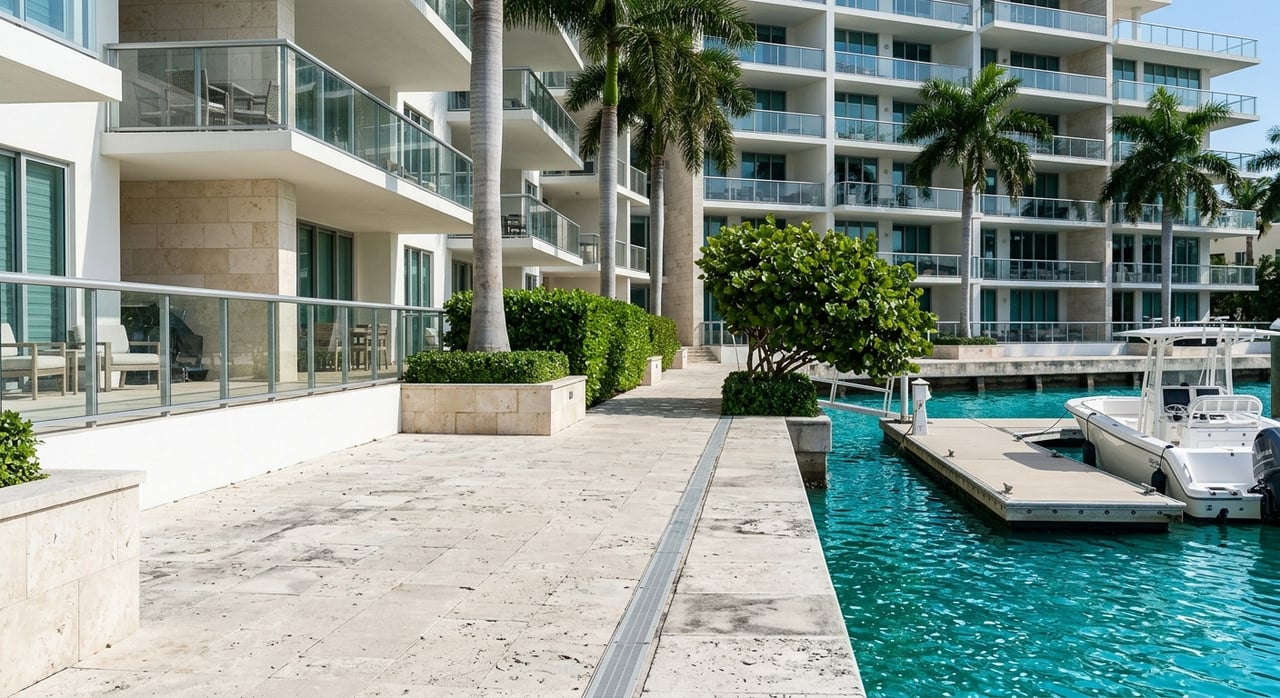
South of Fifth is a tightly defined part of Miami Beach, running from 5th Street to Government Cut and from the Atlantic Ocean to Biscayne Bay. That matters because it is compact, premium, and active enough to show pricing changes sooner than thinner island submarkets do. The City of Miami Beach neighborhood association map helps confirm just how distinct this area is within the broader waterfront landscape.
In Q4 2025, South of Fifth posted a $2.78 million average sale price, a $1.27 million median sale price, 40 closings, 104 new listings, and 181 active listings. It also recorded 153 days on market and 13.6 months of absorption, according to the Brown Harris Stevens Miami Q4 2025 market report. For full-year 2025, the submarket averaged $2.52 million across 181 closings, with average pricing down 3.2% year over year.
That mix makes South of Fifth one of the most useful local barometers. It is more premium than the broader Miami Beach condo market, yet it trades more often than ultra-thin submarkets like Fisher Island. For buyers and sellers, that creates a clearer view of real-time price discovery.
The Q4 2025 sales mix in South of Fifth leaned heavily toward smaller residences. One-bedrooms accounted for 32.5% of sales, while two-bedrooms made up 37.5%, based on the same Brown Harris Stevens report.
That matters because it points to a buyer base driven in part by lifestyle, second-home, and pied-à-terre demand. In other words, this is not only a full-time occupancy story. It is also a market shaped by seasonal use, convenience, and lock-and-leave luxury living.
The citywide market gives useful direction, even if it should not be used as a direct comp set for South of Fifth condos. Miami Beach closed 2025 with a record annual average condo sale price of $979,864, but it also carried 1,395 active listings, 121 days on market, and 16.9 months of absorption, according to the Brown Harris Stevens Miami Q4 2025 report.
That combination tells you something important. Prices can remain high while buyers still gain leverage through longer marketing times, more supply, and more room to negotiate.
Realtor.com’s March 2026 Miami Beach snapshot supports the same tone, showing 2,727 active listings, a $670,000 median home price, 102 days on market, and a 95% sale-to-list ratio, while classifying Miami Beach as a buyer’s market. Because those numbers blend property types, they are best used as a directional read rather than a one-to-one comparison with a South of Fifth luxury condo.
At the top end, the pace is different again. Douglas Elliman’s Q3 2025 Miami Beach/Barrier Islands luxury condo report showed an $8.68 million average sale price, 63 sales, and 141 days on market.
So yes, trophy product is still clearing. But it is not clearing quickly, and it is not following the same rhythm as the broader condo market. That distinction matters if you are buying or selling in an ultra-luxury building or waterfront tower.
It is tempting to lump Miami Beach’s waterfront addresses into one luxury category, but that can lead to bad pricing and poor expectations. These submarkets are connected physically, yet they are not economically identical.
The City of Miami Beach neighborhood association resources separate key island groups, including the Venetian Islands and the Palm, Hibiscus, and Star Islands cluster. Access patterns differ, infrastructure differs, and the pace of trading differs. Those details shape liquidity and buyer behavior.
The Venetian Islands are a road-connected waterfront market that includes Rivo Alto, Di Lido, San Marino, and parts of the Venetian Causeway. The city also completed road restoration across Di Lido, Rivo Alto, and San Marino in 2024, reinforcing the reality that this is a drive-to island market with a different feel and functionality than a private-access island.
As of March 2026, Realtor.com’s Venetian Islands overview showed 112 homes for sale, 105 median days on market, a 95% sale-to-list ratio, and a $2.10 million median listing price. That points to a market with movement, but still enough supply to support thoughtful negotiation.
Fisher Island should not be viewed as just another Miami Beach island. The Greater Miami Convention and Visitors Bureau describes it as an island accessible only by ferry and located off the southern tip of Miami Beach. That access model alone creates a very different scarcity and privacy profile.
Market data reflects that difference. As of March 2026, Realtor.com showed 43 active listings, 145 days on market, a $8.99 million median listing price, and $2,824 per square foot for Fisher Island. In the latest closed-sales benchmark, Fisher Island condos averaged $12.12 million in Q3 2025, with an $11.25 million median and just 4 closings.
That is a much thinner market than South of Fifth. When a submarket trades that infrequently, pricing signals are slower and more distorted by one or two exceptional deals.
Miami Beach’s single-family island cluster, which includes South Pointe, Star Island, Venetian Islands, Sunset Islands, Palm Island, and Hibiscus Island, posted a $7.51 million average sale price in Q4 2025. The same segment had a $3.9 million median, 32 closings, 169 active listings, 147 days on market, and 15.8 months of absorption, based on the Brown Harris Stevens Miami report.
These numbers reinforce the core point: shared geography does not create one unified market. South of Fifth condos, drive-to island estates, and controlled-access Fisher Island residences each move on their own timeline.
If you are buying waterfront property in Miami Beach, South of Fifth can help you read the tone of the market before you commit elsewhere. Its higher transaction volume offers more frequent clues about momentum, pricing pressure, and negotiation conditions.
Right now, the broader picture suggests leverage still exists for buyers. Inventory remains meaningful, marketing times are not especially short, and many submarkets are seeing sale-to-list ratios around 95%. That does not mean every seller is flexible, but it does mean you should not assume list price is the final price.
When you compare options, focus on more than the headline number. A South of Fifth condo, a Venetian waterfront home, and a Fisher Island residence may all appeal to the same luxury buyer, but access, supply, and liquidity can change your negotiating position.
A road-connected island market may offer different flexibility than a ferry-access private island. A high-amenity condo tower may trade more often than a trophy estate, which gives you more data and often more confidence during due diligence.
If you are selling, the biggest takeaway is simple: price against the right submarket. Do not anchor your expectations to a broad Miami Beach average if your property belongs to a much narrower micro-market.
South of Fifth’s 153 days on market and 13.6 months of absorption argue for sharp initial pricing and polished presentation. In a market with this much inventory, the first impression matters. Buyers in this segment are often comparing multiple luxury options, and they tend to act when value, quality, and certainty line up.
Miami Beach and South Florida remain heavily cash driven. MIAMI Realtors reported that cash buyers accounted for 70% of Miami Beach condo and townhome sales in April 2025. The same source noted that 67% of Miami-Dade million-dollar condo and townhome sales were cash, and that international buyers continue to play a major role in South Florida demand.
That has real pricing implications. Cash-rich buyers often care as much about certainty, access, building quality, and ease of ownership as they do about the asking price itself. For sellers, that means strategy should include not only price, but also timing, preparation, and terms that reduce friction.
If you want one place to start reading the Miami Beach waterfront market, South of Fifth is a smart first stop. It is liquid enough to reveal changes, premium enough to reflect luxury demand, and active enough to offer more reliable signals than thinner island submarkets.
From there, you can compare outward. Venetian, Star, Palm, and Hibiscus can help you understand the drive-to estate side of the market. Fisher Island helps define the access-controlled ultra-luxury tier. But South of Fifth often gives you the cleanest first read on where waterfront sentiment is headed.
If you are weighing a purchase, preparing to sell, or comparing Miami Beach’s island micro-markets, working with a local advisor who understands these distinctions can make your strategy much sharper. For discreet guidance tailored to your goals, connect with Laura Castillo.
Stay up to date on the latest real estate trends.
Experience a real estate partnership built on trust, expertise, and genuine care. Laura brings a lifelong understanding of what “home” truly means to every client and every decision.